Wednesday, December 19, 2012

HOW TO MAKE HYDROGEN FUEL FOR CARS


How to make hydrogen fuel for cars has been a lot of hype going on besides about how to run your car on water and water for gas or fuel as well as terms like hydrogen fuel for car kits. Now we will answer your question about "how to make hydrogen fuel for car"


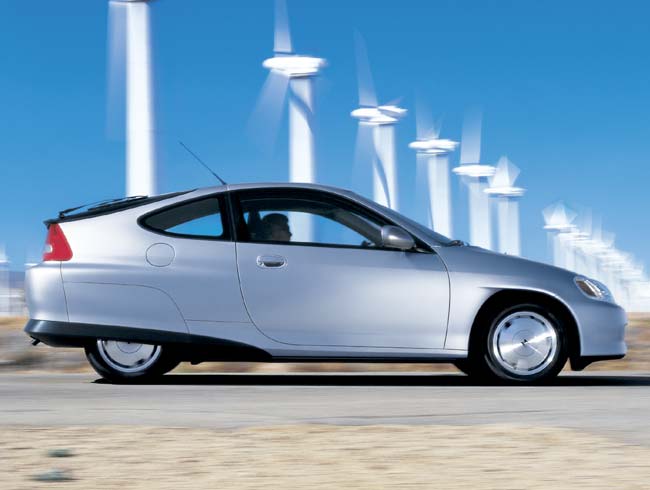
A hydrogen fuel for cars is a vehicle that uses hydrogen as its on-board fuel for motive power. The term may refer to a personal transportation vehicle, such as an cars, or any other vehicle that uses hydrogen in a similar fashion, such as an aircraft. The power plants of such vehicles convert the chemical energy of hydrogen to mechanical energy (torque) in one of two methods: combustion, or electrochemical conversion in a fuel-cell:


 * In combustion, the hydrogen is burned in engines in fundamentally the same method as traditional gasoline (petrol) cars.

 * In fuel-cell conversion, the hydrogen is reacted with oxygen to produce water and electricity, the latter of which is used to power an electric traction motor.


The molecular hydrogen needed as an on-board fuel for hydrogen vehicles can be obtained through many thermochemical methods utilizing natural gas, coal (by a process known as coal gasification), liquefied petroleum gas, biomass (biomass gasification), by a process called thermolysis, or as a microbial waste product called biohydrogen or Biological hydrogen production. Hydrogen can also be produced from water by electrolysis. If the electricity used for the electrolysis is produced using renewable energy, the production of the hydrogen would (in principle) result in no net carbon dioxide emissions. On-board decomposition to produce hydrogen can occur when a catalyst is used.


When Admiral Bush apparent his affairs for a hydrogen-powered car in his State of the Union abode in January, he proposed $1.2 billion in expending to advance a advocate auto that will be "pollution-free." The new vehicle, he declared, will await on "a simple actinic acknowledgment amid hydrogen and oxygen" to ability a car "producing alone water, not bankrupt fumes." Within 20 years, the admiral vowed, fuel-cell cars will "make our air decidedly cleaner, and our country abundant beneath abased on adopted sources of oil." And then resident will ask "How to make hydrogen fuel for cars"


There are currently about 200 hydrogen-fueled cartage in the United States - mostly in California. Most of these cartage are buses and automobiles powered by electric motors. They abundance hydrogen gas or aqueous on lath and catechumen the hydrogen into electricity for the motor application a ammunition cell. Only a few of these cartage bake the hydrogen anon (producing about no pollution) and this to make hydrogen fuel for cars


Hydrogen cartage are starting to move from the class to the road. One California ancestors has afresh busy a hydrogen fuel for cars for claimed use. The U.S. postal service, a amalgamation commitment company, a few Florida Park rangers, and a few clandestine account companies are additionally application hydrogen vehicles. It will apparently be at atomic 10 years, though, afore you can airing into your bounded car banker and drive abroad in an affordable hydrogen-powered car.


Even then, you will charge a abode to refuel your hydrogen car. Currently, there are about 25 hydrogen refueling stations nationwide. This is the alleged "chicken and egg" botheration that hydrogen developers are alive adamantine to solve. Namely: who will buy hydrogen cars if there are no refueling stations? And who will pay to body a refueling base if there are no cars and customers?

Source: Articlealley

Correct Diesel Tuning, all you need to know to get improved power and economy from your diesel.


Diesel tuning is more important than we think. Lets get down to the basics.

Diesel is distilled crude oil (Distillate). Unlike what most 'Hollywood' movies promote of a diesel truck hitting a wall and exploding like a small nuclear bomb, oil does not readily ignite, particularly a liquid form. If we atomise it though, it will burn readily. The diesel principle relies on air being compressed to approx. 500PSI. This in turn heats the air, turning it into the igniter (diesels don't have igniters such as spark plugs). Heard of a glow plug? Glow plug only glow on cold start-up to help warm up the air in the combustion chamber. A bit like when you are pumping up a push bike tyre, the pump gets warm.

Ok, so you now have very hot air and you inject diesel in through an atomising injector. As soon as the diesel leaves the injector and enters the extremely hot air the diesel ignites and combustion begins. Put a poor atomising injector in the picture and you have a different story. Because it is not atomising the diesel enough, the fuel volume burns erratically and slowly as the flame burns through the large droplets of oily fuel. If you were to light up a drum of oil, you would see a similar effect of slow burning and smoke. You can imagine that by now the timing of the combustion process is also upset. Add lower injector pressure than normal, due to age, and you have the timing of the fuel ignition point changing even more (injector opening too early). The injectors doing this alone can make a diesel smoky and sluggish. On a cold morning, the combustion is even further retarded due to cold cylinders and cool combustion and you also get hard starting.

This scenario changes completely with correctly set up injectors. Remember the drum of oil? Well, if you could fill the drum with a misty vapour of oil and light it up, you would not only get a large bang but it would be over within a flash. A good injector sprays fuel out as a mist and the fuel burns rapidly and relatively clean as the droplets are so small that they burn with a puff! A correctly set injector pressure also means the fuel is being injected at the correct time.

Now, the injectors are perfect but the injection pump could be slightly out of tune. Timing has to be set. If it is too early the vehicle can smoke and become quite 'diesel noisy' and if it is too late, the vehicle can feel sluggish. Imagine the spray of fuel as a fist about to hit the piston. If it is hit too far before top dead centre it would not only hurt your fist and the piston but it would make a louder than normal bang as the two things hit head on. If the piston had gone past top dead centre and was hit, the force of the hit would be going down with the piston so you would have too little
impact on it. So you can see why timing is critical for maximum hit effect! Other things need to be checked like the fuel volume delivered by the pump. Too much is power but with smoke, too little is low power with absolutely NO smoke and just right is in the middle of smoke and no smoke! There are a few more complex settings on the pump that are checked and adjusted but these are the main ones.

Well, there are 6 injectors supplying fuel to the engine (Imagining it being a 6 cylinder diesel). Looks like it has no problems getting fuel, but what about the important part that we forgot about, AIR? Well...it has to draw the air through a maze. Filter, pipes, inlet manifold and a tiny inlet valve. This has to happen in a split second and the piston going down has to do all the sucking. That's the governing part of a diesel engines performance. Remember more fuel for more power is just more smoke! So we have to do something about the air to keep things clean. This is where a Turbo system comes into its' own with Diesel engines. With a huge amount of air now available due to the turbo supplying air right to the inlet valve, the piston only has to suck air from there. Lets not forget that 1 cylinder has a suction stroke many times a second, so these fallacies of air being forced into the engine and blowing heads off with a turbo are only that! Now that we have more air, the fuel system can be set up according for more power. [WARNING- This is where the whole equation can come adrift with overheating etc. Things have to be set up by a professional and a professional that knows his JOB!]

One last note; the diesel system that is on all 4WD diesels was designed to run on a fuel with certain burning characteristics. We don't seem to be getting fuel in Australia meeting all these requirements. We have new vehicles smoking that obviously are not designed to smoke when running on real diesel. So when setting up a fuel injection system for tuning we have to take the burning characteristics of this poor diesel into consideration. Try to get your fuel from a reputable and 'known brand' garage and keep your receipts. If you have problems, you then have as much 'come-back' on the fuel garage as you have with a faulty product from a shop.

Safe 4WDriving,
The Diesel Experts
http://www.thedieselexperts.com


Footnote: The modern diesel has come a long way from its beginnings!! Well…so we are all lead to believe!! That's where it all stops. In fact about the only thing that could compare is reinventing the round wheel!! That's right. Nothing has really changed. A diesel still needs fuel and air. Even though we now have trendy things like 'Common-rail High Pressure Injection and Electronics controlling everything, it is still the same old principle. The only major change appears to be the repair costs… as usual. Most 'high tech' injectors now cost over $2000 each and are 'throw away'. Most Injector pumps are becoming 'throw away' at around $6500. Where will it end??


Byron Moore is a freelance journalist who has put together a number of articles on diesel automotive matters through interview and discussion with The Diesel Experts ( see http://www.thedieselexperts.com ) He has had a number of articles published in various automotive magazines and also via the web.Byron Moore is a freelance journalist who has put together a number of articles on diesel automotive matters through interview and discussion with The Diesel Experts ( see http://www.thedieselexperts.com ) He has had a number of articles published in various automotive magazines and also via the web.

Source: Articlealley

Saturday, December 15, 2012

Electric Cars Kits Whats the Cheapest Way to Convert Your Car?


People everywhere are frustrated because they want electric cars, but the few electric cars that are available are way too expensive. A lot of folks are taking matters into their own hands and doing electric car conversions themselves. It's not hard to do. There are plenty of electric cars kits, or manuals, that you can buy on the internet.

What is an electric car conversion? It's when you remove the internal combustion engine from your gas vehicle and replace it with an electric motor that runs on batteries. When you're finished, you'll have a zero-emissions car that's much cheaper to drive than a vehicle powered by gasoline.

Performing a conversion is a good way to boost the resell value of your car. And did you know that electric cars don't break down as much, or need as much maintenance as gas-powered cars? That's because electric engines have fewer moving parts. The only expense is the batteries, which you'll need to change every few years.

In order to do a conversion, you'll need an electric car conversion kit. Some are quite expensive because they come with parts. Others don't include parts, but are detailed sets of instructions that show you exactly how to set everything up and do the conversion. Many of these electric cars kits tell you how to get most of the tools and parts you need cheaply, sometimes even for free.

Many kits can be downloaded right over the internet. Some come with video instruction as well. These kits usually cost anywhere from $30 - $50.

When you're done converting your car, it should be able to go 100 miles on a single charge and travel up to 50 mph. Another benefit is that you'll receive generous rebates from the state and federal governments for driving an electric vehicle.

"It's clear that society is headed down this road," said the executive chairman of Ford Motors recently. But you don't need to wait. Electric cars kits are accessible to everyone right now. It's easy to download a kit and start building your own electric car today!
Find out how to do electric car conversions for as little as $300 at Electric Car Conversion Kits.

Source: Articlealley

Electric Car Kits EV Conversion Guide - Save Fuel Expenses With Electric Vehicle Conversion Guide


This is a less expensive way to obtaining an electric car.

If the high price of driving is getting you down, and you are looking for a more cost effective means to driving, then an electric car conversion is for you. Along with its cost effectiveness, a conversion to an electric car also eliminates greenhouse emissions. That benefits everyone.

Many car owners are seriously considering using and electric vehicle (EV) for their daily day to day commute. This is due to the rising gasoline cost at the local gas station. Since an internal combustion engine requires fossil fuel to generate energy, we will always be at the mercy of the oil cartel. To free ourselves from fossil fuel dependency, we have to consider alternative energy source for our cars. One such alternative is electricity. How do we use electricity to power our vehicle? This article will provide some useful information on the subject.

There is 2 ways for you to enjoy the benefits of an EV. You can either buy a new electric car from the manufacturer or your can convert your existing gasoline driven car to run on electric. Most car owners will choose the latter option. To retrofit a car to run on electricity is quite simple. The idea is to remove the engine and replace it with an electric motor. Since the engine is gone, all its associated components such as gas tank, radiator and fuel lines are also removed. All the free space created will be used to store the battery packs. A custom DIY electric car will need about 20 lead acid flooded batteries to supply power to the motor. An EV with a full charge will be able to travel approximately 150 miles. The actual mileage will depend on the net weight of the car, the driving condition and also the speed of the car.

If you are not well versed with car components, the information above may not be useful to you. In this case, you can send your car to a professional mechanic to be retrofitted. To be prudent, you should have some knowledge on the science of an electric vehicle. This is to make sure you are not paying for unnecessary parts or work done. There are many electric car conversion guides that you can purchase from the web.

Electric powered cars are becoming quite popular these days and for good reason. These vehicles run on batteries and don't cause harmful emissions and pollution. Also they are much more cost efficient because they can help eliminate gas consumption. Running your vehicle on electricity can help you improve horsepower and eliminate your gasoline bill altogether.

By converting your car to run on electricity you can:


Stop paying for gasoline and save hundreds or even thousands of dollars a year.

Reach speeds of 50 miles per hour.

Receive tax refunds for using green energy in your vehicle.

Stop emitting carbon greenhouse gases and protect the environment.

Drive for up to 150-200 miles per charge.

Reduce your maintenance costs.


Instead of paying a professional to convert your car, which may cost you thousands of dollars, you can do the conversion yourself with the help of a diy guide.

If you plan to turn your automobile into an electric one, you must keep a number of things in mind. The lighter the vehicle, the easier it is to convert it and the car must have enough room to place the batteries.

First, you have to replace the internal combustion engine with an electric motor. You will also need: a power controller, fuses, miscellaneous nuts and bolts, rechargeable batteries and power conductors. These materials can be found at your local hardware and are in general very affordable.

Source: Articlealley

Tuesday, December 11, 2012

Nissan Leaf- The Electric Car


Electric cars were once only the notions of science fiction fantasy and imaginative cartoons. Remember the Jetsons? Well, we  have not exactly reached that level of mass air-car mobility, but with electronic cars we are getting closer every day.
Electric cars only trickled onto the market in the 1990’s. I can still remember when stars like Ed Begley Jr. started promoting  electric cars. I thought that this was something that would just be another Hollywood trend. Not so. It seems that the charge of  the environmentalists have stuck a nerve and a slew of environment friendly electronic cars are popping up. Some are hybrids  and some are 100% electronic cars like the 2011 World Car of the Year award winning Nissan Leaf™.
The Nissan Leaf is a beautiful electric car that has made leaps and bounds above the rest on the market today. Besides being  announced the 2011 World Car of the Year, it has electric car features that have proven to be the most desirable for all  conscientious environmentalists, seeking personal transportation that is environment friendly.
• Absolutely no ozone layer shattering tailpipe emissions
• Does not use gas
• Quiet
Add these features to the unique style, and comfort of the new Nissan Leaf and a new level of modern vehicle is achieved.  Some of the features of the 2011 Nissan Leaf are:
• Electric powered steering
• Recycled interior fabrics
• Push button ignition
• 100 miles on one full charge
• And much more


The Nissan Leaf is the leader in electric cars worldwide today.
Electric cars are the wave of the future
Our planet’s dwindling oil supply coupled with the diminishing health of the planet and consistent health concerns of humans,  plants, and animals has left car developers with a window to become greener out of necessity.
Gasoline emissions directly affect our health, our food supply, and the food supply of the earth: our shelter. Without real  solutions to these issues, we will loose all of these and eventually cease to exist. This is a fact. Every little thing that we can do  to overcome this fate is needed. A huge issue has been the large footprint gasoline emissions have left on the planet. The  introduction of electronic cars will help to alleviate this strain on our environment. Electric cars are simply cleaner and more  environment friendly.
So in your effort to go green you should choose an electronic car for your personal mode of transportation. And that car should  be the new Nissan Leaf.
The author is an electric car fanatic. He works at "Nissan Of St Charles" one of the  Nissan Dealers in Chicago

Source: Articlealley

Saturday, December 8, 2012

Electric vs Hybrid Cars: A Short Guide


The world’s natural resources are diminishing at such a rate that demand for fossil fuels will soon far outweigh supply. This is nothing new; the motor industry has been working on alternatives to the combustion engine for years. Electric and hybrid cars could be the vehicles to reduce the impact of carbon emissions on the environment.


Electric cars, as the name suggests, are run solely on electrical power via a lithium-ion battery. With electric car technology, the engine requires no air filter or oil changes and the battery engine is said to last at least 120,000 miles before being replaced. The number of electric cars on the road has not only risen due to an increased production number but also the fact that conventional petrol cars are also being converted, which is an attractive bonus in terms of recycling vehicles.


Whilst electric cars run solely off your power supply, a hybrid car uses both electrical energy and petrol for power. Your hybrid car is filled at the petrol station just as your conventional car and looks similar on the outside, but look under the bonnet and the similarities end. The hybrid car is more efficient than a standard combustion engine in that it uses an electrical battery and combustion energy in tandem to increase fuel efficiency. In series hybrids, a standard fuel engine produces electricity to generate the electric motor and propel the car. In parallel hybrids, the car is set in motion by the engine or battery. The great advantage of the hybrid car in terms of energy efficiency (resulting in reduced emissions) is that when the engine loading is low, any excess energy is stored and when the energy output needs to be increased, both the lead engine and stored energy work together to power the car. In fact, when the car is idle in electric mode it actually turns off. In addition, to conserve energy, the intelligent design of the hybrid switches to electric power when travelling at low speeds and remarkably even the residual energy produced when braking is fed-back into the lithium battery as reserve energy to be used as and when required.My Amazon Page


Many countries are making it more attractive to use alternative fuel with government incentives such as lower road taxes for vehicles with low CO2 emissions; and with the running costs for hybrids alone being 15-30% less per mile than conventional cars, that hybrid car is looking more and more attractive to the general public. Currently, the price of a hybrid is slightly more than a new conventional car, but as demand increases, prices will proportionally decrease.


Nevertheless, with the initial outlay being slightly higher, this extra cost will be reaped with savings in fuel consumption and reduced road costs. In terms of whether the electric or hybrid car suits your individual needs, it is a case of weighing up your driving needs, where you live and what is available in your area. In the end, regardless of the extra cost or savings (on your wallet or the environment) of these new types of vehicle, you will still have to carry out the same general upkeep and maintenance of your vehicle – the cost to replace your windshield, for example, will still be the same no matter what car you drive!

Isla Campbell writes for a digital marketing agency. This article has been commissioned by a client of said agency. This article is not designed to promote, but should be considered professional content.

Source: Article

Saturday, December 1, 2012

Advantages and Disadvantages of Owning an Electric Car


The President of the United States set a goal to have one million electric vehicles on U.S. roads by 2015. As a result of this impending objective, there is no doubt that electric vehicles will become an integral part of society. Hence, the following are a few advantages and disadvantages for persons to consider when purchasing or simply converting their gasoline car into an electric car.


Advantages of Converting to an Electric Car


• The use of traditional fuels (gasoline) is completely eliminated and replaced by an electrical grid source - generated from traditional and renewable energy sources

• Increasing availability of recharging stations for persons to recharge their batteries speedily

• Noticeable reduction in the operation cost – electricity per mile is 15-25% the cost of gas allowing for a reduction in daily fuel expenses

• Dependence on foreign oil resources are reduce significantly as a result of recharging an electric vehicle from domestic sources

• Electric car conversion allow for little or no emissions of green house gases during operation of the vehicle

• Electric vehicles are known for their low maintenance and operation costs


Disadvantages of Converting to an Electric Car


• The use of Lithium-ion batteries only allows for 250-300 mileage range

• Given that technology is still developing on the manufacture of electric cars, certain components for e.g., batteries - may be expensive

• There are still an inadequate amount of commercial battery re-charging stations making it difficult for individuals to recharge quickly and efficiently

• Some individuals may be hindered from recharging their vehicles at their homes given that their dwelling facilities are not conducive or developed for such activity


Technological Advancements for Owners of an Electric Car


Technological innovation will most certainly allow for new developments towards improved efficiency of key engine parts (especially the battery) of the electric car. It will ultimately allow for increasing the mileage, thus making it a worthy venture to be considered.


The construction and strategic location of battery recharging stations will become an integral part of society’s infrastructure, as the production of electric cars increases. Added improvements and facilities for using an electric car will encourage consumers to purchase these types of vehicles more readily. This will then enable each individual to make an easier choice towards reducing their carbon footprint per individual within the environment
.


Many persons are becoming increasingly aware of the negative effects and pollution on the environment and how it may affect future generations. As a result they are willing to contribute to the sustainability of the environment for future generations. Hence, many individuals are making an effort to do what they can by obtaining a new electric car or converting from a gasoline car to an electric one, thus reducing their carbon footprint per individual.

Source: Articlealley,